


Media &
Publications
Discover our open data publications!
We work as technical partners in the development of data that can be shared and used as a source of information for research, reports and articles.
Please read and share this information.
For questions about citation and copyright, consult:contato@tewa225.com
Worst Cities for Women (2024)
The first edition of Tewá 225’s own study evaluated 319 brazilian cities with more than 100,000 habitants to measure gender inequalities in key areas: pay inequality, the representation of women in city councils, the rate of young women who are neither study nor work and the percentage percentage difference between men and women in the same situation. The analysis also considers factors such as race, biomes, regional economies and other realities that influence the available opportunities for women.
The analysis was based on 2024 data from the ‘Índice de Desenvolvimento Sustentável das Cidades’ (IDSC-BR), focusing on the key targets of Sustainable Development Goal 5 (SDG 5).

Worst Cities for Women (2024)
The first edition of Tewá 225’s own study evaluated 319 brazilian cities with more than 100,000 habitants to measure gender inequalities in key areas: pay inequality, the representation of women in city councils, the rate of young women who are neither study nor work and the percentage percentage difference between men and women in the same situation. The analysis also considers factors such as race, biomes, regional economies and other realities that influence the available opportunities for women.
The analysis was based on 2024 data from the ‘Índice de Desenvolvimento Sustentável das Cidades’ (IDSC-BR), focusing on the key targets of Sustainable Development Goal 5 (SDG 5).
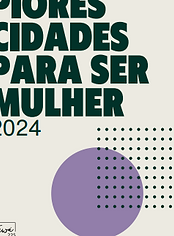
Worst Cities for Women (2024)
The first edition of Tewá 225’s own study evaluated 319 brazilian cities with more than 100,000 habitants to measure gender inequalities in key areas: pay inequality, the representation of women in city councils, the rate of young women who are neither study nor work and the percentage percentage difference between men and women in the same situation. The analysis also considers factors such as race, biomes, regional economies and other realities that influence the available opportunities for women.
The analysis was based on 2024 data from the ‘Índice de Desenvolvimento Sustentável das Cidades’ (IDSC-BR), focusing on the key targets of Sustainable Development Goal 5 (SDG 5).
Mapping the Social Scenery of the Amazon's Restoration
In collaboration with the Alliance for Restoration in the Amazon, alongside partners IIS and IPAM, we support the mapping of the social scenery in the Brazilian Legal Amazon (ALB), with a focus on landscape and forest restoration. This study aims to understand the key social actors in the ALB context, their relationships and dynamics, with the goal of developing the best strategy to strengthen the restoration and conservation agenda.

DIAGNOSIS OF THE SOCIAL ORGANIZATION OF CARE IN BELÉM (PA)
The Diagnosis of the Social Care Organization in Belém (PA), conducted by UN Women Brazil in collaboration with the Municipality of Belém, received technical support from Tewá 225 to develop the process of listening to the voices of people who work with care work and analyzing care networks in the capital of Pará in 2024.
This study is part of the Ver-O-Cuidado project, which extends from 2022 to 2025, and actively involved both municipal administration and civil society organizations. The result of this collaborative effort is a series of knowledge products that will serve as a reference for other municipalities interested in implementing public policies focused on care.

Evaluation of the Community Mobilization and Adolescent Participation Strategy (CMAPS)
In collaboration with UNICEF, we conducted an evaluation of the Community Mobilization and Adolescent Participation Strategy (CMAPS). The study aimed to identify regional challenges and their impact on the lives of young mobilizers and communities.
Tewá 225 was responsible for data collection and analysis, organizing focus groups, conducting interviews and applying questionnaires with traditional communities and venezuelan migrants in the cities of Boa Vista and Pacaraima (RR). We conducted a detailed systematization of each stage and result, allowing for a visualization of the impact of the program’s activities and points of attention in order to promote continuous improvement of the initiative and its adaptability and replicability.

Best Practices Guide for Healthcare Professionals – 'Programa Adolescente Saudável'
In collaboration with Plan International, Tewá 225 developed the Guide to Best Practices for Health Professionals, which consolidates lessons learned from the implementation of this tool in basic health units (UBS) and identifies effective actions for providing care to adolescents. Based on the mapping of practices implemented by the ‘Programa Adolescente Saudável’, the guide aims to provide recommendations, examples and activities for professionals to ensure that the services offered are accessible, friendly and of high quality.

Territorial Diagnosis of the 'Sete de Setembro' Indigenous Territory
A territorial and socio-environmental diagnosis of the lifestyles, agricultural and livestock production, and local entrepreneurship initiatives of the Paiter Suruí indigenous people of the Sete de Setembro Indigenous Territory, located in Cacoal (RO). The study was conducted as part of the 'Programa de Empreendedorismo Regional Regenerativo', developed by ReNature and implemented by Tewá 225 in partnership with COOPSUR. The study uses, for the first time in Brazil and adapted for indigenous people, the TAPE methodology (Tool for Agroecology Performance Evaluation) from the FAO (Food and Agriculture Organization of the United Nations).

SCORE Brazil: Lessons Learned and Best Practices in São Paulo’s Apparel Companies
A best practices guide based on a technical study of Tewá 225 evaluating the implementation of the International Labour Organization’s (ILO) SCORE Brazil methodology in small and medium-sized enterprises in the apparel sector of the São Paulo metropolitan area. The project was supported by the 'Associação Brasileira da Indústria Têxtil e de Confecção' (ABIT) and the 'Associação Brasileira do Varejo Têxtil' (ABVTEX) . The study was responsable to adapt the SCORE methodology to the Brazilian context, train instructors, support the implementation of pilot training sessions and develop initiatives to increase the awareness of the sector's stakeholders regarding the benefits of responsible business practices.

Territorial diagnosis
from Santa Barbara
from Pará
Socio-environmental diagnosis of the situation of rural producers in the municipality of Santa Bárbara do Pará (PA), carried out based on the Regenerative Regional Entrepreneurship Program (RREP), developed by ReNature in partnership with FARFAM, with the aim of strengthening regenerative agriculture and entrepreneurship of the county.

For being a Girl 2021
In 2014, the Por Ser Menina survey was launched with the perception of girls aged 6 to 13, who reported their biggest concerns, their perceptions about rights and also about the inequalities that directly impact their lives. In 2021, even with the obstacles of the Covid-19 pandemic, a new edition was launched and developed by Plan International with technical support from Tewá225, listening to the perception of more than 2,000 girls aged 14 to 19 on ethnic-racial inequalities and gender for effective access to their rights.
-min.jpg)
%20(2021)-min.jpg)
Women in Manufacturing:
study on gender and working conditions in the Fashion Industry
Diagnosis of the living and working conditions of women seamstresses in the metropolitan region of São Paulo. Its development by the Labor Public Prosecutor's Office (MPT), through the Regional Labor Attorney's Office of the 2nd Region (PRT-SP), by the United Nations Office for Project Services (UNOPS) and by UN Women, with technical support from Tewá225 was to map the main difficulties these workers face in managing data that serve as a basis for structuring a strategic plan aimed at economic empowerment and the promotion of decent working conditions.
